In the economic development landscape of 2026, the traditional site and incentive model has been challenged by a more complex driver of growth. The most successful communities leverage their physical environment to foster a cohesive sense of identity.
For many communities, identity carries inherent tradeoffs. This is particularly evident in premier university towns, where a singular, dominant brand—while an economic powerhouse—can narrow external perceptions and limit business growth. TIP’s recent work with College Station, Texas, explored how a city can leverage a world-class institution like Texas A&M University (Texas A&M) without being exclusively defined by it.
The Challenge: Beyond the Aggie Brand
A community’s identity frames its first impressions, and for College Station, that identity is synonymous with Texas A&M—an attractor of nationally and globally competitive talent and an engine for excellence in research, sports, and culture. This connection produces millions in annual tourism and provides a consistent economic base. However, overreliance on any single institution, no matter how prestigious, can limit broader economic potential.
And there is plenty of potential. Strategically positioned in the Texas Triangle (the megaregion consisting of Dallas-Fort Worth, Houston, San Antonio, and Austin) and served by a regional airport, the City is a commercial hub with deep retail density. Intellectual capital is equally robust, encompassing not only Texas A&M’s flagship campus but also Texas A&M–RELLIS, Blinn College, and emergent innovation networks. When combined with real estate development, redevelopment, infill potential, and a high quality of place, these advantages form a dynamic value proposition.
Recognizing the need to capitalize on this potential, the City of College Station (City) engaged TIP in 2025 to facilitate the preparation of an economic development master plan. The resulting framework is built on four reinforcing goals: Identity, Industry, Innovation, and Ignition. Placing Identity as Goal 1 was a deliberate decision. It recognizes that College Station must evolve into a premier destination for residents, businesses, students, and visitors alike by aligning efforts with how the community itself wants to grow.
Establish place-based districts as anchors of community identity.
The Identity goal centers on establishing distinctive, place-based districts that serve as the connective tissue between the university and the broader community. To bridge the gap between campus-oriented and off-campus populations, the plan recommends the City cultivate intentional interactions through ongoing district planning, collaborative governance, and targeted reinvestment. This includes supporting the implementation of the Greater Northgate Small Area Plan to promote the district for both university nightlife and daytime entertainment, alongside the Northeast Gateway Redevelopment Plan to create lasting impressions of the City’s broader identity. District councils, spurred by the City, are also suggested to coordinate shared investments between institutional, business, and resident representatives within individual districts. To catalyze private action within these boundaries, the City should also identify and develop new grant programs, such as a Business Improvement Grant for underutilized sites, while expanding existing neighborhood grant programs to support joint resident-business applications. These administrative tools—combined with a unified branding toolkit and multimodal wayfinding—ensure that each district is a functional, accessible, and high-visibility asset for the entire community.
To enhance talent retention across all age groups, the plan recommends defining and supporting emergent districts in south College Station, such as Wellborn and retail hubs like Midtown and Tower Point, that attract families and retirees. These districts represent opportunities to strengthen the City’s off-campus brand, as that area grows in population. Additionally, a major emphasis is placed on attracting and retaining mid-career professionals, including a suggestion that the City engage Texas A&M on a new initiative to survey former students about missing quality-of-place assets to inform future district planning. The plan also identifies the Midtown Business Park as a development opportunity for a sports innovation and entertainment district. By rezoning the area to anchor a mixed-use environment around the anticipated baseball complex, the City can drive tourism activity and attract primary jobs in sports medicine and biotech through university and employer collaborations.
Align development with the identity the City wants to project.
Identity ultimately shows up in the built environment. If a community lacks modern office space or industrial sites, it will struggle to attract and retain the businesses it hopes to grow. For this reason, the plan treats real estate development as a proactive tool rather than a reactive process. The strategies suggest the City launch a real estate strategy that prioritizes prime site opportunities to spark additional investment, guided by a formal process to identify, acquire, and market sites for shovel-ready development.
Looking toward future growth, the plan recommends the City determine the feasibility of a new large-scale industrial business park of 1,000 acres or larger in the extraterritorial jurisdiction. This involves conducting land purchase analyses to evaluate annexation opportunities and service costs. To ensure these sites meet market demands, the City should keep engaging with regional and national real estate developers and brokers to communicate the specific site needs of target industry companies. Preparing land for industrial and research uses also signals that the City intends to compete in sectors such as advanced manufacturing and applied research. This collaborative, regional approach positions prime industrial and commercial sites, such as the BioCorridor area, for high-value growth that complements the City’s broader economic and housing goals. By shaping the types of development that occur, the City reinforces an identity grounded in innovation and economic diversity.
Build a reputation as a year-round destination.
University communities often experience dramatic seasonal shifts in activity. To create a more consistent event schedule and year-round asset activation, the plan calls for leveraging the diversity of the visitor base and integrating programming beyond the academic and athletic calendar.
One opportunity is to position College Station as a destination for academic conferences, community-led festivals, cultural events, seasonal programming, and target industry or association events—drawing professionals, researchers, and visitors throughout the year. The Texas A&M+Visit College Station Event Management Partnership recommended in the Tourism Strategic Plan would coordinate festivals, conferences, and cultural programming across both institutions. This collaboration maintains an activity calendar independent of the football or academic schedule. When successfully executed, the enhancement of a college town’s destination appeal is a direct investment in the community’s economic resilience by elevating year-round intellectual, professional, and cultural exchange.
Enhance quality of life through connectivity and place-based initiatives.
A shared identity only works if people can participate in it. Housing affordability and physical connectivity are essential to making that possible. The strategy frames housing availability as a core economic issue. Already faced with rising housing costs, College Station is projected to face a shortfall of more than 4,000 housing units by 2030. Implementation of the City’s existing Housing Action Plan is critical to ensuring businesses have access to a diverse range of experienced talent across life stages. A community that welcomes students but pushes out early- and mid-career professionals, families, or service workers risks its long-term economic competitiveness.
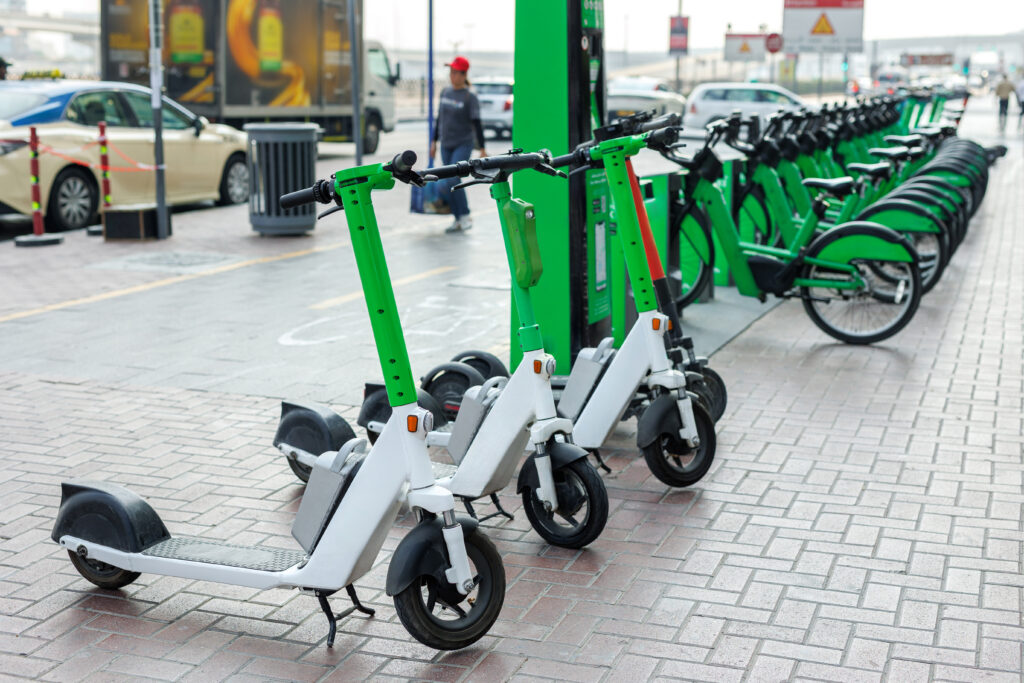
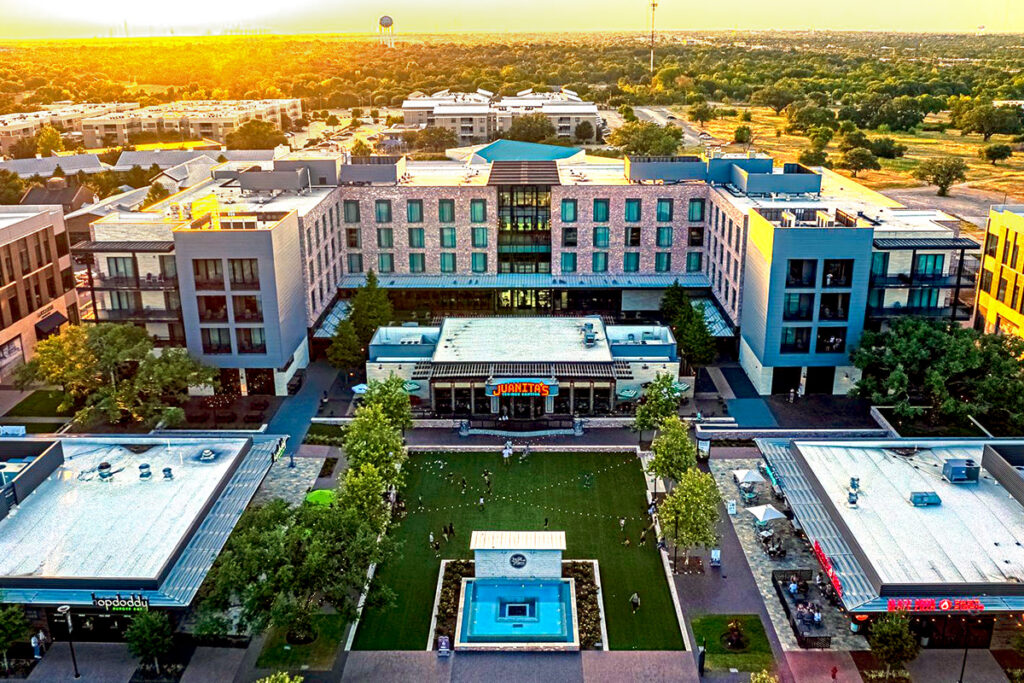
Connectivity matters as well. Expanding green corridors that link neighborhoods, parks, and campus spaces helps integrate the university into the broader community. Improvements to high-activity areas like Century Square and Northgate, alongside better wayfinding, reduce friction for residents and visitors alike. These investments move the city from being a collection of isolated nodes to a unified ecosystem that promotes a tangible, place-based sense of belonging for every resident, student, and visitor.
Takeaways for Operationalizing Identity as Economic Resilience
Together, these investments reinforce an identity rooted in accessibility, quality of life, and shared public spaces. For economic development practitioners and municipal leaders, the College Station experience offers a roadmap for balancing an institutional brand with a local community identity. Afterall, identity is not just a marketing exercise. It is a structural framework for economic competitiveness and resilience. Communities seeking to move beyond a single institutional brand should consider several practical steps.
- Align real estate decisions with community identity. Establish clear criteria for municipal land acquisition, partnerships, and site preparation so that development reinforces the community’s long-term economic vision.
- Empower districts to express local identity and enable primary job opportunities. Create district councils to serve as implementers of small area planning, ensuring businesses and residents shape programming, placemaking, and branding.
- Design places that retain talent beyond graduation. University communities often lose mid-career professionals. Districts that combine housing, amenities, and employment opportunities can help retain talent that might otherwise leave.
- Prioritize everyday places that foster interaction. Public spaces, walkable corridors, and neighborhood amenities often play as great a role in shaping community identity as large signature projects.
- Be proactive about coordinating planning with the university and other regional players. Formal collaboration around land use and infrastructure helps ensure that regional investments reinforce the broader community rather than operate in silos.
Image credit: Century Square courtesy of the City of College Station, Texas.