Infrastructure conversations in economic development often focus on industrial parks, utility capacity, transportation networks, and site readiness. While these investments remain essential, smaller communities positioned near rapidly growing metropolitan areas increasingly require a broader approach to infrastructure—one that also includes parks, trails, downtown districts, recreation assets, housing, and public spaces. These place-based investments help communities attract and retain talent, strengthen quality of life, support tourism, and preserve local identity amid growth.
This reality shaped the development of Shelbyville 2075: Legacy in Motion, a recent TIP project that established a long-range investment framework for Shelbyville and Bedford County, Tennessee. Situated between the fast-growing metropolitan regions of Nashville, Tennessee, and Huntsville, Alabama, the community benefits from expanding markets and labor pools while facing many of the challenges that accompany regional growth, including housing pressures, infrastructure demands, and increased competition for workers. Although manufacturing remains a cornerstone of the local economy and cultural assets contribute to a strong sense of place, community leaders recognized that long-term competitiveness would depend on creating the amenities and experiences that encourage residents—particularly younger workers—to build their futures locally. Legacy in Motion identifies the strategic investments needed to convert regional growth pressures into lasting economic opportunity and preserve the character that residents value most.
A Vision for Intentional Growth
Funded through the support of Cooper Steel, local leaders engaged TIP to facilitate a comprehensive planning effort. The project combined extensive stakeholder engagement and quantitative analysis from late 2024 through the fall of 2025. The TIP team recorded 680+ community touchpoints through leadership interviews, roundtables, public forums, and innovative engagement activities, including a live-polling data mixer at the Cooper Steel Arena.
The findings revealed a community that embraces intentional growth. When respondents to the live polling tool described Shelbyville today, terms such as “growing,” “changing,” and “welcoming” frequently emerged. Looking 50 years into the future, however, aspirations shifted toward “thriving,” “prosperous,” and “safe.” Importantly, residents consistently emphasized that future growth should be “responsible,” “planned,” and “managed” rather than allowing the community to be passively shaped by external change.
Survey results reinforced that perspective. Respondents to the community visioning survey identified friendliness, public safety, and overall quality of life among the community’s greatest strengths, while recreation, entertainment, healthcare access, and educational opportunities emerged as areas for improvement. A concurrent student survey produced similar findings, with respondents prioritizing recreation, retail, and entertainment amenities as future investment priorities. The students were also asked to suggest a title for the 50-year strategy, and Legacy in Motion was selected as the winner. Together, responses underscored that quality-of-place infrastructure is a central component of the community’s long-term talent and business development strategy.
The Value of Place-Based Infrastructure
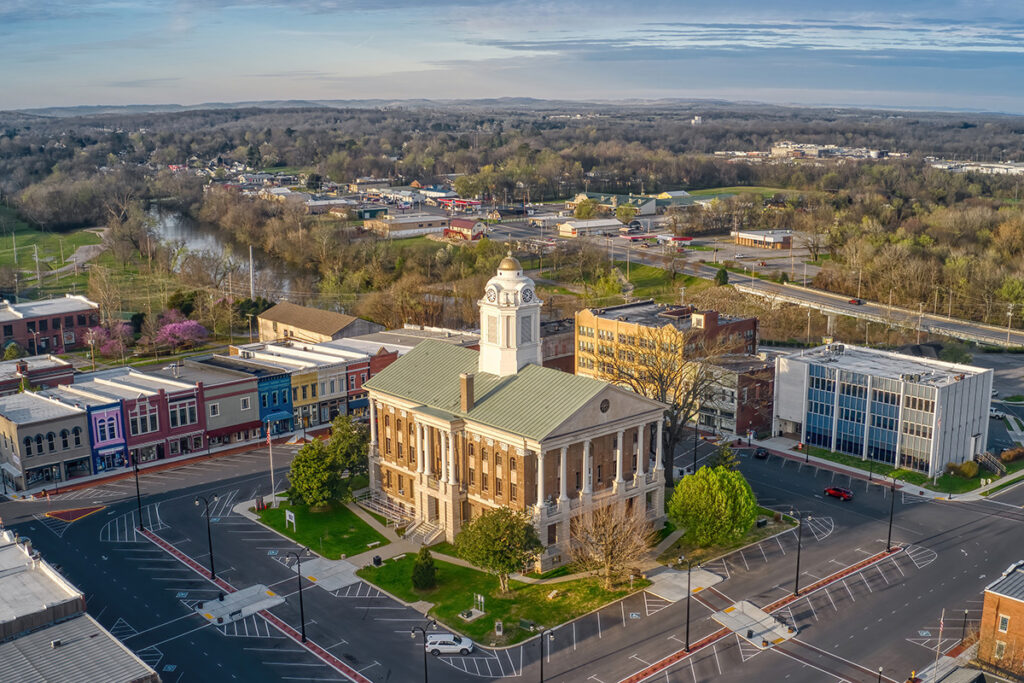
The planning process also highlighted that Shelbyville-Bedford County’s greatest opportunities build on existing assets. Residents consistently identified the Walking Horse National Celebration as the community’s premier tourism asset, the Celebration Grounds and the historic downtown square as priority locations for future investment, and the Duck River and surrounding open spaces as defining features of the community’s identity. Rather than advocating for entirely new destinations, stakeholders focused on strengthening connections between these assets and increasing their economic impact.
That perspective informed several major investment priorities. The plan calls for the creation of an interconnected downtown and riverfront destination corridor through completion of the $3 million Riverview District project, including a river overlook and riverwalk connection linking the waterfront to the downtown square by 2028. Additional priorities include the $2.5 million expansion of H.V. Griffin Park (launched in October 2025), development of multimodal trail networks, and continued enhancement of public gathering spaces.
Although these projects differ from traditional industrial infrastructure investments, their economic role is equally important. Connected parks, trails, riverfront amenities, downtown districts, and cultural venues support workforce attraction, visitor spending, entrepreneurial activity, private investment, and long-term population growth. They also help communities differentiate themselves in competitive regional markets.
Tourism as an Infrastructure Strategy
Another key component of Legacy in Motion emphasizes the importance of the visitor economy as a diversification strategy for smaller communities. Tourism is often discussed separately from economic development, but in practice, many of the same assets that attract visitors also improve quality of life for residents and support business recruitment efforts, in addition to injecting outside dollars into the local economy.
Shelbyville-Bedford County illustrates this overlap. The community possesses strong cultural assets, a distinctive downtown environment, outdoor recreation opportunities, and growing regional accessibility. Yet stakeholders identified a significant barrier to realizing this opportunity: a shortage of overnight lodging options. As a result, many visitors stay in neighboring counties, limiting local spending and hotel occupancy tax collection.
The TIP-designed framework addresses this challenge through a 10-year “Stay in Shelbyville” pilot initiative that includes a designated lodging priority zone, a hotel investment prospectus, and the deployment of a hotel deal toolkit utilizing performance-based property tax abatements. The plan further recommends reinvesting incremental tourism-generated revenue captured under Tennessee’s 8 percent hotel tax cap directly back into wayfinding, streetscapes, and destination marketing. This creates a reinforcing cycle in which visitor spending supports public improvements that further enhance the resident and user experience. Early alignment is already underway, supported by a recent $2.7 million state budget appropriation to renovate the RV parks at the Celebration Grounds and Bridge Bedford’s planned launch of the “Walking in a Winter Wonderland” holiday event.
Place-Based Infrastructure Requires Stewardship
One of the more distinctive aspects of Legacy in Motion is its recognition that quality-of-place infrastructure operates on a different timeline than many traditional economic development investments. Industrial parks, utility extensions, and site-development projects are often measured by near-term outcomes: acres developed, buildings constructed, or jobs created. By contrast, riverfront districts, trail systems, downtown revitalization efforts, and tourism destinations typically evolve over decades. Their value is created not only through initial capital investments but through ongoing programming, maintenance, partnerships, and reinvestment.
Recognizing this reality, the plan pairs its investment priorities with a 50-year implementation framework designed to respond to changing leadership and market conditions while maintaining long-term strategic direction through three distinct mechanisms.
- Non-Governmental Stewardship via Bridge Bedford: Because public assets require management that outlasts municipal election cycles, the framework establishes long-term ownership of the vision within a newly formed 501(c)(3) nonprofit organization, Bridge Bedford. Serving as the external steward of the blueprint, this entity is structured to maintain operational continuity and systematically align public, private, and philanthropic resources.
- Accountability Across Generations: Execution is driven by four dedicated implementation teams—the Thrive, Prosper, Equip, and Attract working groups. To prevent stakeholder burnout while continuously integrating fresh perspectives, the model features rotating leadership structures every three to five years, all tied to a nested performance framework of annual KPIs, five-year milestones, and 10-year scorecards.
- Disciplined Agility via Strategic Sprints: The half-century timeline is operationalized into five distinct, 10-year tactical sprints. At the midpoint of each sprint, structured “Pivot Points” allow the community to formally continue, adapt, accelerate, retire, or add initiatives based on real-time market data and demographic shifts.
A Roadmap for Small Town Competitiveness
The TIP-led Legacy in Motion planning process highlights that, for smaller communities located near fast-growing metropolitan areas, long-term competitiveness depends on more than industrial sites and utility capacity. Downtown districts, recreational amenities, trail networks, tourism assets, housing options, and public spaces are critical forms of economic infrastructure that support talent attraction, visitor spending, and business growth.
Rather than treating these quality-of-place investments as secondary priorities, Legacy in Motion positions them as central components of Shelbyville-Bedford County’s economic future. The framework reinforces three broader lessons. First, quality-of-place assets such as downtown districts, riverfronts, parks, trails, and cultural destinations should be viewed as economic infrastructure rather than amenities alone. Second, communities positioned near growing metropolitan centers can strengthen their competitiveness by investing in assets that differentiate them rather than attempting to replicate the scale of nearby urban markets. Finally, realizing the full value of these investments requires a long-term commitment to stewardship, programming, and reinvestment. The economic impact of place-based infrastructure is rarely generated through a single project; it emerges over time as individual assets become connected into a broader ecosystem that supports residents, visitors, and businesses alike.
As workforce expectations evolve and growth pressures intensify, communities that take a broader view of infrastructure will be better positioned to preserve local character and capture new economic opportunities.