Urban areas face familiar challenges, such as severe traffic congestion and shortage of affordable parking. These issues frustrate commuters, tourists and residents alike, and they persist even in places with well-planned transit systems. The “first- and last- mile” gap continues to push people back into personal vehicles, limiting the effectiveness of transit investments. Furthermore, when navigating dense city centers, people increasingly require a flexible, point to point mode of transportation that is both efficient and cost effective. For economic developers, these gaps are more than transportation inconveniences. They shape access to jobs, the viability of commercial districts, and the overall quality of place.
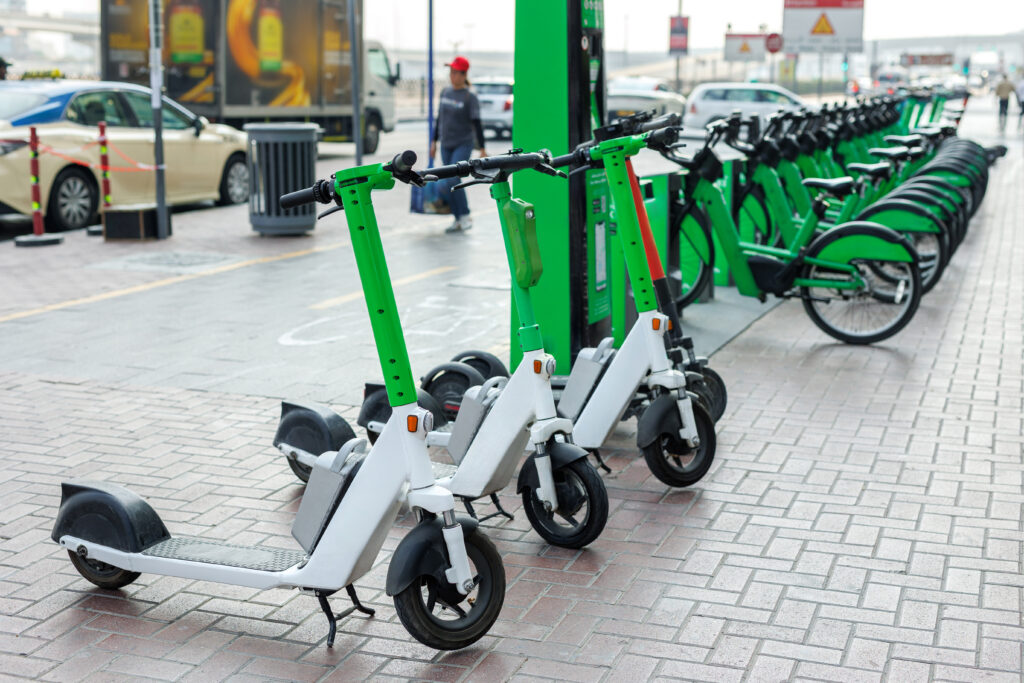
The 2010s brought a new approach to addressing these transit challenges. Bikes began appearing on street corners overnight, signaling the rapid rise of micromobility as a form of public transit in the American system. Micromobility refers to small, lightweight vehicles such as bicycles, e-bikes, and electric scooters operating at low speeds and generally powered by electricity or human energy. Broadly, these shared systems fall into two categories: bikeshare (partially or completely pedal-powered, either docked or dockless) and e-scooters (fully electric and typically dockless). By offering a flexible, space-efficient alternative to cars, micromobility helps bridge the first- and last-mile gap, reduce parking demand, and shift short trips away from personal vehicles. The use of shared micromobility in the United States skyrocketed in 2018 with riders taking 84 million trips, more than double the previous year. This trend naturally attracted investor interest, and numerous companies soon emerged across the US to provide micromobility solutions. The performance of these systems offers lessons about what drives success and how communities can align micromobility with broader economic development goals.
The Resilience Gap: Lessons from a Pandemic Shock
While the idea was promising given the growth, many systems experienced a shock during the pandemic. The business case for shared micromobility disappeared as downtowns emptied, people avoided public transit, and work from home became the norm. Many micromobility services became inactive. Between March and December 2020, a total of 86 systems closed permanently.
Post-COVID, many cities relaunched micromobility systems that were discontinued during the pandemic, either through the same or a different operator. However, data from the Bureau of Transport Statistics (BTS) reveals a stark divide in system resilience based on the type of system. Approximately 76 percent of docked and 79 percent of dockless bike systems survived five years from launch, compared to just 56 percent for e-scooters. Despite their initial popularity, e-scooters have struggled the most to survive long-term. While they offer user convenience and allow operators to centrally control speeds via geofencing, they face operational hurdles. Their lightweight nature makes them vulnerable to damage and vandalism, and the constant manual collection required for charging drives up operating costs. Furthermore, improper e-scooter parking frequently blocks sidewalks, leading to regulatory crackdowns or outright bans by several municipalities.
In contrast, bikeshare systems demonstrate far greater longevity. Docked systems require a significant initial infrastructure investment, making cities and operators more committed to maintaining the service, and the physical docks keep public spaces organized. Dockless bikes also show strong resilience, likely due to greater hardware durability than e-scooters and appealing to a more established and health-conscious commuter base. But are there factors beyond the type of hardware that determine the viability of a system?
Transit hubs, cafes, shops, and offices clustered together provide the continuous, short trip demand necessary for people to consistently choose this mode of transit. Although this high amenity density is traditionally viewed as a prerequisite for success, the data above displays a more nuanced picture. Surprisingly, the volume of local amenities does not strongly influence the survival of docked and dockless bike systems. However, e-scooter fleets tell a different story, showing much a higher difference depending on the urban environment they operate in. Given what the data tells us about bikeshare systems, this contrast is somewhat unexpected from an accessibility standpoint, given that e-scooters generally offer a gentler learning curve and require less physical exertion to navigate similar distances compared to other forms of active transportation.
Beyond Density: Engineering Success in Diverse Environments
Cities like Dallas, Texas, experienced a rapid e-scooter rollout that ultimately necessitated a strict, city-mandated removal. In Dallas, the system faced significant public safety challenges, such as unsafe riding behavior during the night, contributing to a concerning spike in related medical emergencies. These issues were amplified by initial infrastructural insufficiency; without an established network of protected lanes, users faced a “where to ride” dilemma, often navigating awkwardly between fast-moving vehicle traffic and crowded pedestrian walkways. However, recognizing the potential transit value of these systems, Dallas eventually reintroduced e-scooters under a highly structured regulatory framework. To make it safer, they began controlling fleet sizes, implementing lower speed limits, and utilizing geofencing technology to strictly control or restrict usage on certain streets and in pedestrian-heavy areas. Although this relaunch has seen mixed results regarding ongoing enforcement challenges, it is still a significant step in the right direction for the city’s transit infrastructure.
On the other hand, Washington, DC, demonstrates a highly successful micromobility program, demonstrating that, when paired with proactive last-mile connectivity infrastructure that clearly resolves this routing ambiguity, high urban density can effectively drive sustainable, high-volume ridership rather than causing problems. Collaboration between traditional public transit and micromobility can provide a great combination for increased usage of both systems.
While cities like Washington, DC, are able to rely on sheer density to drive ridership, cities with dispersed or segregated density must actively engineer their connectivity. Atlanta, Georgia, provides an excellent example of how to address this issue by repurposing historic railway corridors into a network of multi-use, pedestrian- and bike-friendly trails, known as the Beltline. The city successfully shifted bicycles and e-scooters off congested vehicular roads and onto dedicated infrastructure. This interconnected pathway system bridged distinct, separated neighborhoods and drove a massive surge in adoption, resulting in over 2.1 million micromobility rides in 2023 alone. Atlanta’s success highlights a broader truth that micromobility thrives most when its design is tailored to the demands of the local geography. Unlike in Atlanta, in many cities lacking comparable urban trail infrastructure, tailoring the system means requiring physical docks to manage logistics and maintain infrastructure and public order. This trend is clearly visible in recent bikeshare data, which reveals that a diverse range of specialized markets are now investing heavily in expanding their docking networks.
Strategic Integration: Scaling for Specialized Markets and Infrastructure
When examining the net addition of docking stations from 2021 to 2025, particularly when adjusted for population size, the highest growth isn't isolated to traditional metropolitan hubs. Instead, the data highlights a diverse mix of large cities, college towns, and, notably, high-tourism ski towns. Destinations like Aspen, Colorado; Breckenridge, Colorado; and Park City, Utah, have heavily invested in docked stations to solve their unique first and last-mile connectivity challenges. By offering a reliable, organized alternative for moving between resorts and ski bases, these networks alleviate severe seasonal traffic and parking constraints. This model proves that with targeted infrastructure, docked micromobility can thrive in specialized, high-traffic economies, offering a clear blueprint for replication in similar tourist destinations.
As the micromobility market matures, there will be no one-size-fits-all solution but rather a strategic decision of how to integrate micromobility into the fabric of the city. While high urban density remains one of the biggest pillars of confidence and drivers of success, especially for an e-scooter system, different systems succeed in different environments. Yet, whether a fleet is deployed in a large city alongside a dedicated trail or within a ski town, there is one undeniable common thread for long-term viability of micromobility systems: a focus on good, physical bike and scooter infrastructure. To make these programs truly effective and sustainable, cities must resolve the "where to ride" dilemma by building safe, dedicated pathways and seamlessly integrating their micromobility networks with existing public transit, prominent points of interest, and key tourist destinations.